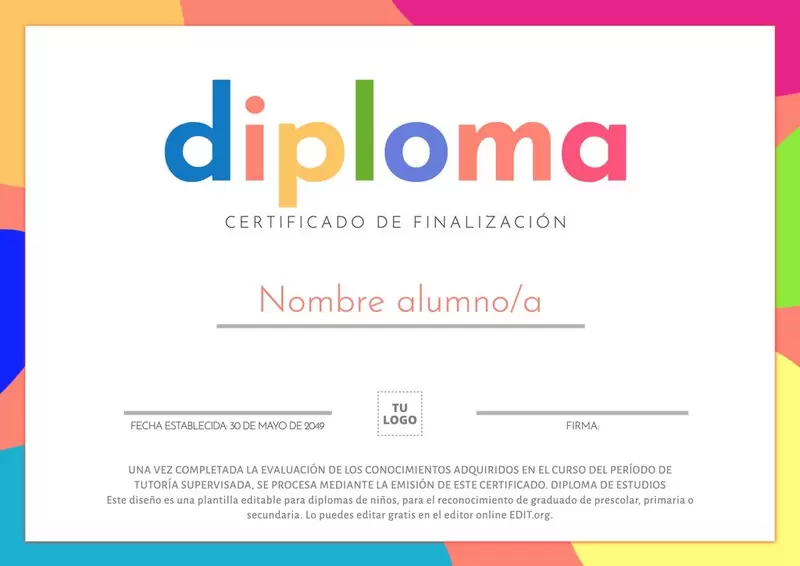
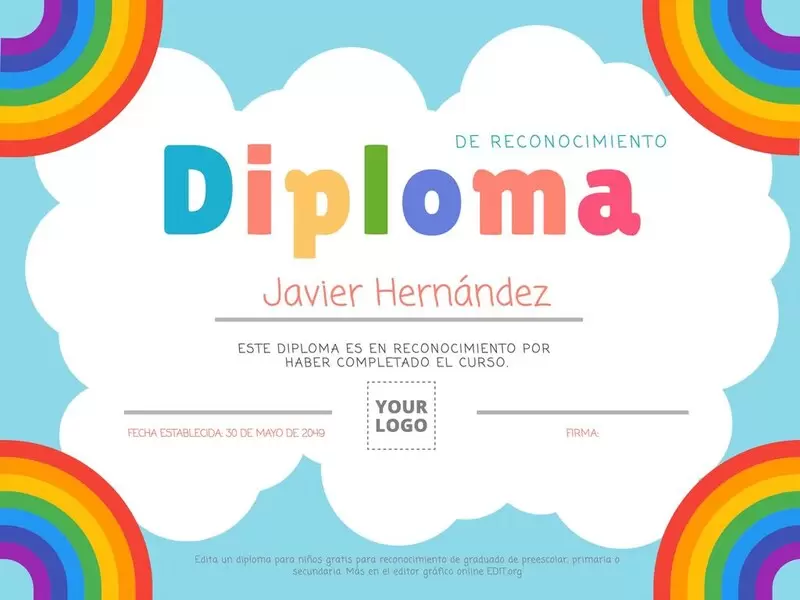
Personaliza las plantillas de diplomas infantiles de preescolar, primaria y secundaria de Edit.org y sorprende a tus alumnos de manera fácil y rápida.
Crea un diploma para niños personalizado con las plantillas del editor Edit.org
Los reconocimientos son una muy buena forma de incentivar a seguir aprendiendo, sobretodo en los cursos primaria, secundaria o incluso preescolar, en donde la labor de los maestros y maestras en la educación es en gran parte pedagógica, formando los valores y enseñando a aprender y disfrutar de ello.
El diseño de diplomas es todo un arte. Nuestro equipo de diseñadores gráficos profesionales ha creado muchas plantillas de diplomas para niños para editar e imprimir. Obtendrás un resultado gráfico espectacular, mucho mejor que los que puedas encontrar editables en Word. Todos están listos para rellenar, enviar a imprimir. Podrás encontrar mucha variedad:
- Reconocimientos para niños
- Diplomas de graduación preescolar
- Deportes
Te invitamos a usar nuestra herramienta de edición en lote para editar varios diplomas a la vez. Empieza seleccionando un diploma de base y haciendo clic en la caja de texto con el nombre del niño. A continuación, haz clic en el botón de Crear en Lote y copia-pega la lista de nombres de tus alumnos. Al descargar los diseños, se bajarán todos los diplomas personalizados de golpe. ¡Olvídate de editarlos uno por uno!
Descubre plantillas con un aspecto más infantil (kinder) y otras con un look más enfocado para colegios. Podrás guardar online todas las versiones que quieras, subir el logo del colegio, la firma del director, etc. Si te interesa ver diplomas o certificados de clases o cursos con un diseño más formal también puedes encontrarlos en nuestro editor.
Entra ahora en el editor online, selecciona y edita una de las plantillas de diplomas infantiles. Elige el diseño que más te guste y rellénalo con los datos del alumno. ¡Sorprende a los estudiantes y familias con estos diseños tan bonitos!
The Vulgar Witch -
In the realm of folklore and popular culture, few figures evoke as much intrigue and revulsion as the vulgar witch. Often depicted as a crone-like woman with a penchant for malevolence and a taste for the grotesque, the vulgar witch has become a staple of Halloween decorations and horror movies. But beneath the surface of this caricature lies a complex and multifaceted figure, one that warrants closer examination and a more nuanced understanding.
Over time, the vulgar witch has evolved to reflect changing societal attitudes and cultural values. In the 19th and early 20th centuries, the image of the witch was influenced by spiritualism and Theosophy, which emphasized the mystical and occult aspects of witchcraft. This led to a more romanticized and exoticized portrayal of witches, often depicted as mysterious and alluring figures. The Vulgar Witch
In modern popular culture, the vulgar witch has become a staple of horror movies, TV shows, and literature. From the Wicked Witch of the West in The Wizard of Oz to the witches of American Horror Story , the image of the witch as a malevolent, ugly, and powerful figure persists. However, this portrayal often relies on tired stereotypes and reinforces negative attitudes towards women, particularly those who are perceived as different or marginalized. In the realm of folklore and popular culture,
The vulgar witch is a complex and multifaceted figure, one that warrants closer examination and a more nuanced understanding. By deconstructing the stereotypes and negative portrayals of the past, we can begin to see the witch in a new light. Whether seen as a symbol of female empowerment, a powerful magical practitioner, or simply a complex and intriguing figure, the vulgar witch remains a fascinating and thought-provoking topic. As we continue to explore and reimagine the image of the witch, we may just find that she has more to offer than we ever imagined. Over time, the vulgar witch has evolved to
The concept of the vulgar witch has its roots in ancient European folklore, where witches were often seen as malevolent beings with the power to harm and manipulate. During the Middle Ages, the witch hunt phenomenon swept across Europe, resulting in the persecution and execution of thousands of people, mostly women, accused of witchcraft. The image of the witch as a wicked, ugly crone was perpetuated through art, literature, and propaganda, cementing the stereotype in popular culture.